

 This week we have a timely and helpful guest post from one of my long-time readers, Angela Privin – who is also a digestive health coach:
The best thing I ever did for my digestion was quitting my sugar habit. It allowed me to rebalance my biome and heal my Irritable Bowel Syndrome – 16 years ago and counting.
Sugar addiction is one of the most difficult addictions to overcome due to social pressure. Sugar is a celebrated part of the Western diet and an essential part of gatherings.
Social and cultural influences aren’t the only reasons why it’s difficult to tame the sugar dragon. A diet high in sugar feeds yeast and pathogenic bacteria in the intestines. These microbes need sugar to survive. When their primary food source is cut off, they excrete endotoxins upon death. This may manifest as flu-like symptoms, increased sugar cravings, and mood swings/irritability.
To reduce overgrowth of bacteria or fungi, moderate carbohydrate intake is key. Too low a carbohydrate intake can damage hormones, reduce energy and starve beneficial bacteria. Too much sugar and carbohydrates can promote infections, increase inflammation and destabilize blood sugar levels and mood. The “Goldilocks” approach of moderation with sugar and carbohydrates is a smart and balanced approach.
Social pressure, food cravings and physical withdrawal are reasons why people are unable to quit sugar “cold turkey”. But there is another way.
As a digestive health consultant, I suggest slowly cutting out sugar, processed carbs, and inflammatory foods/treats. The slow path is less shocking to the system and more sustainable in the long term.
You can have your cake and eat it too without feeling terrible
While many people with digestive issues tend to be extremist, the all-or-nothing approach is too difficult, especially around holidays or special occasions when treats are celebratory and traditional.
Train your taste buds to like less sweet treats. Do this slowly by rebalancing your microbiome to reduce sugar cravings. First, remove inflammatory foods such as gluten, all processed/junk foods, dairy, and in some cases, grains. Then slowly increase the fiber in the diet. The slower you go, the easier it becomes. They will not put your body into a state of withdrawal.
 Your biome is shaped by what you eat and also determines your cravings. If you feed him healthier foods, he will experience stronger cravings for healthier food. I found that regular treats began to taste overly sweet.
Feeling successful in reducing sugar in small steps increases motivation and consistency, which are key to achieving difficult goals. Healthy replacement is more important than discipline. So swap your regular treats for healthier ones so you don’t feel deprived and tempted.
What are healthy treats? I wrote a cookbook with more than 60 of them. Below I explain my criteria.
What is a healthy treat?
Healthy treats avoid white sugar, wheat, and other gut-irritating grains to calm the gut. Swap grain flours for cassava, nut, seed or coconut flours. I add gut-supporting ingredients like prebiotic fiber, secret veggies, and gut-soothing collagen to make my treats even healthier.
If you make your own treats, you can slowly reduce the sweetener each time. Go as fast or slow as you like. Remember: slower is better. No pressure.
 Standard treat recipes call for 1 to ½ cup of sweetener. I recommend no more than ¼ cup to start with.
The goal is to ultimately reduce the sweetener to a few tablespoons of maple syrup or honey per recipe. This way you can enjoy the extra muffin without feeling guilty and indulge yourself.
Here are some examples of ingredients you can add to your treats to stabilize blood sugar, rebalance the biome, tame inflammation, and repair the gut lining.
Hydrolyzed collagen – adds protein and helps repair the intestinal lining
Cinnamon – helps balance blood sugar
Coconut flour/butter/oil/water or flakes – antibacterial, antiviral and antifungal properties.
Green tea – kills bacteria and feeds beneficial bacteria
turmeric – tames inflammation
cranberries – feeds Akkermansia, an important strain of bacteria in the intestines
Cassava flour – Nut-free, grain-free, resistant starch nourishes anti-inflammatory bacteria
Flaxseed meal – nourishes beneficial bacteria and is a great detoxifier
Tigernuts – a nut and coconut free alternative to milk production
Food isn’t everything, but it is a foundation for healing the gut. Transform the “restrict and binge” cycle into the joy of baking your own low-sugar treats.
The way you think about your food is important. Emotions such as guilt, fear and shame have a negative impact on digestion. The opposite is true for joy and gratitude.
Remember to always listen to your body and “treat yourself” with recipes like the Pumpkin Bread Pudding Bars below.
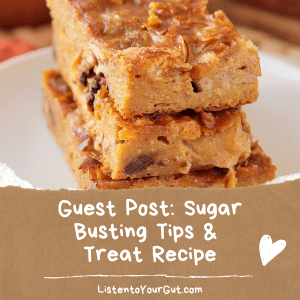
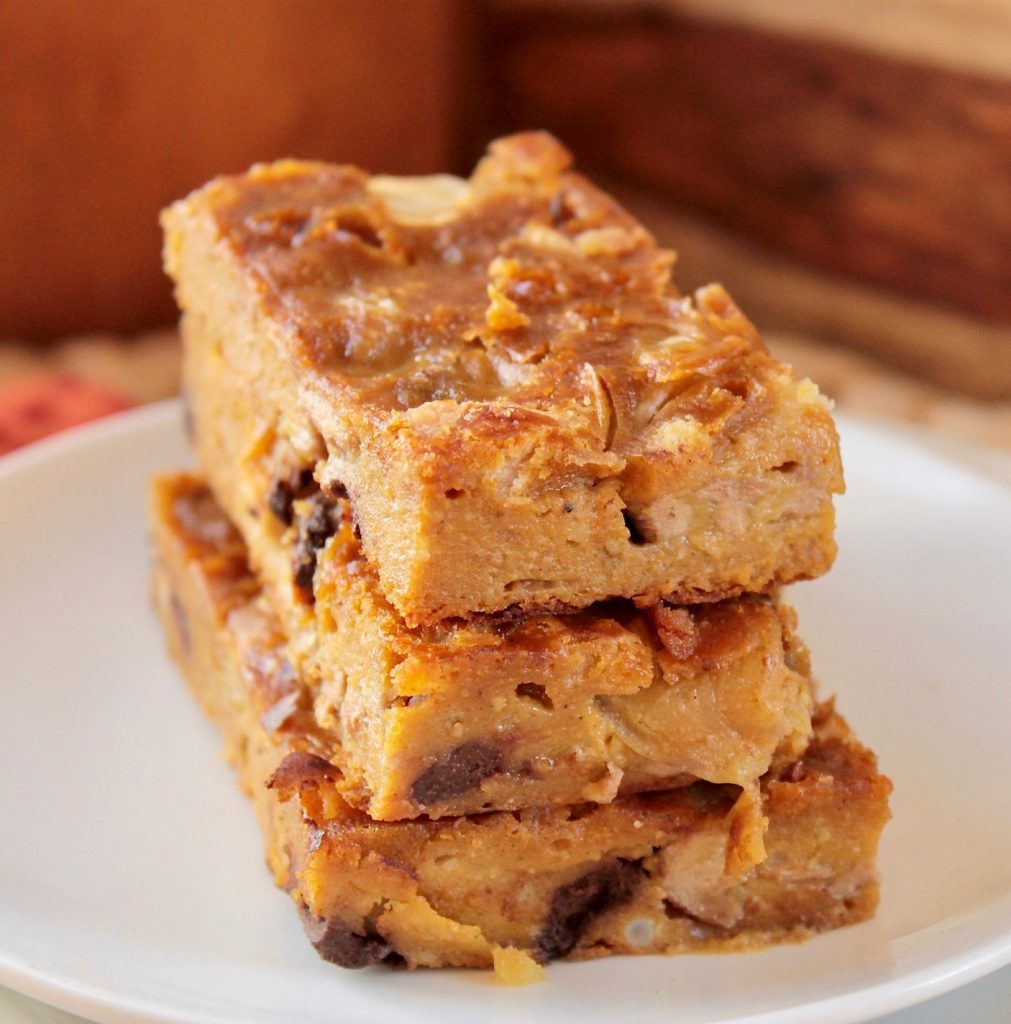
Pumpkin Bread Pudding Bars
The seasonal flavors of pumpkin meet creamy bread pudding. Pumpkin is easy to digest and full of safe fiber. Start with 2 tablespoons of sweetener and slowly increase to 1 teaspoon, even if it takes months.
Ingredients:
- Grind 2/3 cup pumpkin seeds in a food processor to release the oils. Grind for 2 minutes, scraping down the sides, and repeat about four times.
- 2 eggs
- 2 tablespoons maple syrup
- 2 sliced bananas
- 1 teaspoon vanilla
- 1/4 teaspoon salt
- 1 cup pumpkin puree
- 1/2 teaspoon Pumpkin Pie Spice (a blend of cinnamon, ginger, nutmeg and all spices)
- Optional: 1/4 teaspoon cardamom
- 1 tablespoon lemon juice
- 1/2 cup tapioca flour
- 3 tablespoons apple butter or applesauce
- 2 teaspoons baking powder
- 3 tablespoons butter or ghee or coconut oil or shortening (your choice)
- 1/3 cup chocolate chips (optional)
- 1.5 apples, cut into small pieces
- Optional: 1 tablespoon coconut butter (powdered and sprinkled over the dough)
Here’s how:
- Preheat oven to 350 F.
- Grind the pumpkin seeds in the food processor for 8 minutes, stopping every 2 minutes to scrape down the side (or just use store-bought nut butter). If you want the pumpkin seed butter to be creamier, let it process longer. However, this still works well if the consistency is still a bit crumbly/grainy.
- Melt the oil of your choice (I used butter)
- Mix all ingredients in a bowl using a hand mixer or spatula/fork
- Bake for an hour. To bake it, I used a 9″ x 13″ Pyrex cake. If you use a smaller container, the dough will be thicker and will need to bake longer.
- Let cool, cut into bars and enjoy!
Note from Jini: I tried this recipe myself and while it’s definitely delicious, I found that the maple syrup just made the whole thing too sweet since my bananas were already very sweet. In the future I would use 1 tbsp. Maple syrup (if you have it) and if you use honey, then even less. Remember, it’s always easy to add sweetness by sprinkling coconut sugar or drizzling honey/maple syrup over the bars – but you can’t remove the sweetness. So if this is your first time trying this recipe, err on the low side.
 Author Biography: Angela Privin suffered from irritable bowel syndrome for six years and couldn’t get good help from her doctors.
16 years ago, she was able to manage her symptoms and heal her gut through diet changes, supplements, detoxification and lifestyle changes. Her experience inspired her to become a holistic health coach. It helps people with digestive problems and irritable bowel syndrome.
IBS taught Angela how to cook and in her free time she recently wrote a book with treat recipes and nutritional advice for people with digestive problems. Part nutrition bible, part permission to enjoy food, Treats That Heal shows how to make simple treats that soothe inflammation rather than trigger it. The variety of recipes offers some low FODMAP, nut-free, egg-free, sugar-free and coconut-free options.

Jini Patel Thompson is an internationally recognized expert in natural healing for digestive diseases. She healed herself from widespread Crohn’s disease and has been medication and surgery free for over 25 years. Jini has appeared on numerous podcasts, TV and radio shows in the US, UK, Canada and Australia, giving people hope and vision on how to heal their colitis, Crohn’s disease, diverticulitis and irritable bowel syndrome (IBS) using all-natural methods. Her books on natural healing of digestive diseases have been sold in over 80 countries worldwide. Jini is married and has three children, nine sheep, 11 horses, a cat and three dogs.
