


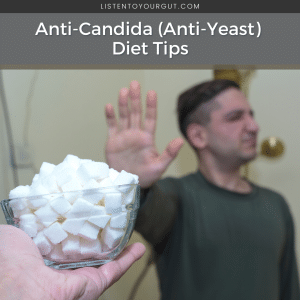
 An anti-Candida diet (anti-yeast diet) is based on starving the yeast. To “starve” the yeast, you should avoid sugar, wheat and dairy products, which the yeast thrives on.
Anti-Candida (Anti-Yeast) Diet Tips
I’m going to share with you some foods to avoid to starve the yeast, as well as some good options to incorporate into your diet to combat candida overgrowth. Let’s start with the foods to avoid, number one being the worst culprit – sugar!
Foods to avoid if you have a yeast deficiency
- Sugar
- fruit juices
- Simple (starchy) carbohydrates such as white flour, potatoes and legumes
- Grains (wheat, rice, quinoa, barley…)
- Foods containing yeast (baked goods, alcohol, products with hydrolyzed yeast…)
- Vinegar and pickled or fermented foods (pickles, olives, soy sauce, hot sauce, many spices and salad dressings…)
- Peanuts, pistachios, cashews, mushrooms (often have mold residue)
- Hydrogenated or partially hydrogenated oils
- Acidic and acid-forming foods (including alcohol)
- Milk (contains lactose sugar)
Foods to eat when yeast is starving
- Lots of fresh vegetables; preferably raw, steamed or juiced
- Natural yogurt (watch out for sugar), sour cream, cream cheese and butter
- Stevia and xylitol
- Unpasteurized apple cider vinegar
- Organic and herbal coffee and tea
- Coconut, olive, grape seed and linseed oil (cold pressed)
- lemon juice
- Raw nuts and pumpkin seeds
- Herbs and natural salt
- Eggs
- Meat
- Fish and seafood (pay attention to mercury content)
- poultry
- Basic or alkalizing foods
When following this anti-Candida (anti-yeast) diet, keep in mind that you may get worse before you get better as the Candida yeast dies and releases toxins. After two weeks, you can start adding starchy vegetables and low-carb fruits back into your diet, but pay attention to how you feel. For healthy gut flora, it’s good to continually keep your consumption of carbohydrates, fruit and sugar low – you’ll feel better and probably lose fat and build muscle too!
A holistic approach
I met with my good friend Dr. Carolyn Dean – doctor, naturopath, herbalist, acupuncturist, nutritionist, lecturer, consultant and author – talked about the safest ways to eliminate Candida overgrowth (Candida yeast infection) and detoxify your system. Dr. Dean states that the basis of yeast treatment is:
- An anti-Candida diet (anti-yeast diet) that avoids sugar, wheat and dairy products
- Taking an antifungal (olive leaf, caprylic acid, oregano oil)
- Detoxification with psyllium and bentonite
- Supplementing with probiotics (the good bacteria)
People with inflammatory bowel disease (and even irritable bowel syndrome) need to be very careful when attempting to clear infections or detoxify, including a candida cleanse. Because their systems are so sensitive, protocols that are fine for most people trigger an outbreak. That’s why we want to stick with very specific supplements that have already been tested by thousands of patients with ulcerative colitis or Crohn’s disease, and go slow and gentle.
This blend of probiotics, bentonite, psyllium and caprylic acid, combined with an anti-Candida diet (and of course fighting the underlying emotional pathogens), is an effective candidiasis protocol for almost anyone.
My full anti-candida (anti-yeast) protocol can be found here.
Jini Patel Thompson is an internationally recognized expert in natural healing for digestive diseases. She healed herself from widespread Crohn’s disease and has been medication and surgery free for over 25 years. Jini has appeared on numerous podcasts, TV and radio shows in the US, UK, Canada and Australia, giving people hope and vision on how to heal their colitis, Crohn’s disease, diverticulitis and irritable bowel syndrome (IBS) using all-natural methods. Her books on natural healing of digestive diseases have been sold in over 80 countries worldwide. Jini is married and has three children, nine sheep, 11 horses, a cat and three dogs.

