


 Ideally, you should get your digestive enzymes from food (raw foods, fermented foods, homemade yogurt, etc.) and from your body’s own production.
However, in case you simply cannot get enough natural enzymes or need additional support because your own body’s production is not at the right level. I found these high quality, natural enzymes in both capsule and chewable form that you can eat with or after meals.
Many digestive enzymes are cultivated on Aspergillus oryzae (mold). But then they aren’t filtered properly and you end up ingesting the spores – especially not good for someone with an unbalanced or vulnerable intestinal flora!
This is the main reason I have refrained from using or recommending digestive enzymes for so long.
But fortunately, filter technology has improved. And these Houston TriEnza enzymes (derived from Aspergillus) were purified from the fungal substance using 8 to 12 different purification methods. This means that there are NO fungal substances in this enzyme product!
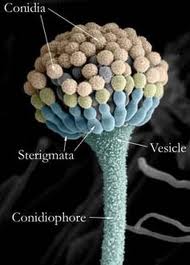 If you have a known allergy to Aspergillus proteins, caution should be exercised when taking mushroom-derived enzyme products. However, the allergenic parts of Aspergillus are usually the parts of the fungus that are removed by the enzymes during processing.
The other reason I like this particular brand is that it combines ALL the enzymes needed for protein, carbohydrate and fat digestion in one product. However, they do not contain cellulase, so they do not interfere with the effects of sustained-release medications.
When to take enzymes
Take digestive enzymes with the first bites of your meal or just before the meal. However, it is more important to take the enzyme, if not right at the beginning, then during or after eating. Food stays in the stomach for up to 3 hours. Therefore, adding enzymes at any point during the meal still provides benefits.
If you are a “grazer” who eats constantly during the day. You may want to take the enzymes at fixed dosing intervals, such as every 4 or 5 hours a day.
*Note: Remember that if you have more than 3 bowel movements per day, you should not swallow pills/capsules (the intestinal transit time is too fast) – in this case it is best to use the chewable tablets.
What are enzymes?
Enzymes are proteins made by cells in our body. They are specialized proteins that function. For example, synthesizing chemicals and compounds, rearranging molecules, adding elements to compounds, and breaking compounds.
There are many types of enzymes and each type performs a specific function. In order for an enzyme to work, it must have access to its substrate, the material on which an enzyme has an effect. If there is no substrate available to the enzyme, the enzyme does not perform any function. For example, an enzyme called catalase is present in our blood.
Catalase converts hydrogen peroxide into water and oxygen. This is why peroxide bubbles appear when it is applied to a wound.
Since peroxide is not normally found in our blood, catalase circulates in the blood and has no effect until peroxide enters the body. A substrate acts as an “on-off” switch for its respective enzyme. Catalase is only activated in the presence of peroxide and nothing else.
How do enzymes work?
Enzymes act as catalysts of biochemical reactions. A catalyst increases or accelerates the rate of a chemical reaction. The thousands of chemical reactions that take place in our bodies every second could not take place without enzymes that accelerate these reactions. For example, a protein can be broken down into amino acids in the laboratory without the use of an enzyme. However, this requires extreme temperatures, high pressure and very strong acids; Conditions that are incompatible with life.
Even under these conditions, the reaction takes hours to complete in the laboratory. Using enzymes, in this case a mixture of proteases, the reaction can be completed in water at normal temperatures within minutes.
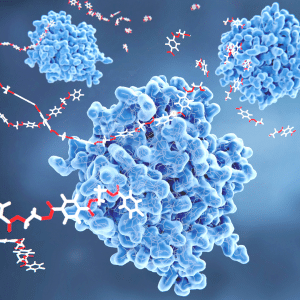 Another unique aspect of enzymes is that they do not change during the reaction, that is, they facilitate the reaction without being destroyed or changed in the process. For this reason, one enzyme molecule could theoretically change an infinite amount of substrate. When you have endless time.
Increasing the amount of enzyme reduces the time required to complete the reaction. For example, given enough time, a catalase molecule could convert an entire bottle of peroxide into water and oxygen.
If you double the number of catalase molecules, you halve the time it takes to convert the peroxide bottle.
This is related to the enzyme dosage as follows:
Higher doses of enzyme cause the reaction to reach its “end point” more quickly. Because a meal spends 90 to 180 minutes in the stomach, the enzymes have this time to do most of their work before the food enters the small intestine. Peptides can be absorbed there (peptide absorption does not take place in the stomach).
Larger meals require more enzymes to complete the task of breaking down food in a given amount of time. This is the true message regarding enzyme dosage; the proteins are broken down over a certain period of time.
The beauty of enzymes is that if the particular molecule they are working on is not present, the enzyme will not do anything. If you take the enzyme lactase and lactose is not present, the lactase has no job and does nothing except pass through the gastrointestinal tract as a dietary protein.
Original post from May 2011. Last updated October 2023.

Jini Patel Thompson is an internationally recognized expert in natural healing for digestive diseases. She healed herself from widespread Crohn’s disease and has been medication and surgery free for over 25 years. Jini has appeared on numerous podcasts, television and radio shows in the US, UK, Canada and Australia, giving people hope and vision on how to heal their colitis, Crohn’s disease, diverticulitis and irritable bowel syndrome (IBS) using all-natural methods. Her books on natural healing of digestive diseases have been sold in over 80 countries worldwide. Jini is married and has three children, nine sheep, 11 horses, a cat and three dogs.

