

 Before launching my new QuikPlus line of atomic-sized minerals (Nano, Angstrom), I had difficulty finding a supplier who could supply me with zinc at the concentration I needed for Bone Matrix. I have collected A LOT of data supporting the importance of zinc in oral health – I have found that increased copper and zinc levels in the outer layers of tooth enamel contribute to increased mineral levels in deeper layers of tooth enamel. For this reason I decided to include it in my bone matrix formulation.
It’s safe to say I was frustrated and stuck – so I blamed it on the Universe/Divine and asked, “Is this ratio really crucial? Please give me a sign!”
The next morning I received an email from my brother, an MD geneticist, with an article saying that autism begins in utero because the copper-zinc ratio is wrong. Well, that was the answer I was looking for, so I kept looking until we found the right supplier! Now it’s an important part of my dental cavity healing protocol, and with increasing concerns about immune system health, we’ve launched a NEW QuikPlus product – you guessed it: atom-sized (nano) zinc!
From temporary fillings to antifungal pastes
I’ve also touched on zinc in a few other blog posts: as part of a daily supplement list for healing and detoxifying depression, using zinc oxide as a temporary filling for a tooth cavity, as a main ingredient (pumpkin seeds – which contain zinc and magnesium) in my Chlorophyll and Coriander Pesto Heavy Metal Detox recipe, and in my blog post on Zinc Deficiency, Low Hydrochloric Acid, and Leaky Gut Syndrome.
You can also mix zinc oxide with wild oregano oil to make one strong antifungal paste. Simply take 1/4 cup zinc oxide (you can find pharmaceutical grade on Amazon) and add wild oregano – stirring constantly with a disposable wooden stick or popsicle stick until a sticky paste forms. Wild oregano is a broad spectrum antipathogen (kills viruses, bacteria, fungi and some parasites) and the zinc oxide dries out the area or wound. Mushrooms need moisture to thrive.
For all of these reasons and more (keep reading!), I added atom-sized ionic liquid zinc to the QuikPlus mineral line. You may have noticed that zinc lozenges have a fairly strong taste, or that they make your tongue sore. Well, this atom-sized (nano) zinc does not need to be digested (safe for the gut) and is tasteless when mixed with a liquid such as water, juice, tea, smoothie, shake… or my favorite: 1 drop in my Emergen-C drink!
I’ve recommended supporting your body with key immune-boosting substances such as vitamin C, vitamin D3, zinc, B-complex vitamins, oral wild oregano oil, aged garlic, olive leaf extract, medicinal mushrooms and therapeutic-grade probiotics – but what exactly is the role of zinc in our bodies and how does it boost immunity?
How does zinc boost immunity?
Zinc is an essential mineral (trace element) that is involved in many aspects of cell metabolism. It is important for growth and development as well as immune function. According to the National Institute of Health (NIH) fact sheet on zinc, zinc is “required for the catalytic activity of approximately 100 enzymes, plays a role in immune function, protein synthesis, wound healing, DNA synthesis, and cell division. Zinc also supports normal growth and development during pregnancy, childhood, and adolescence and is.” Prerequisite for the correct sense of taste and smell. Daily zinc intake is required to maintain a stable condition, as the body does not have a dedicated zinc storage system.”
 This 2019 review of studies summarizes clinical evidence that “zinc as a direct antiviral as well as a critical factor of antiviral immunityparticularly since zinc-deficient populations are often most at risk of contracting viral infections such as HIV or the hepatitis C virus.” Have you ever heard of or experienced taking zinc as a supplement to relieve herpes flare-ups? As shown in the study above, there is evidence that zinc may actually help and act as an antiviral against infections such as the herpes simplex virus, as well as a number of viral infections – including the common cold.
Zinc deficiency is surprisingly common (more so in developing countries), usually due to lifestyle, age and disease-related factors. I discuss zinc deficiency a bit in my blog post “Low Hydrochloric Acid and Leaky Gut Syndrome” (mentioned at the beginning of this post). Zinc is essential for maintaining normal physiology, and deficiency can manifest itself in many forms – from delayed wound healing to immune deficiency to impairment of multiple sensory systems.
Zinc can play an important role in this Stress and chronic inflammation as well as. In this study, researchers used zinc supplementation (either to support immunity or to correct zinc-dependent immune functions in people with zinc deficiency) to influence the progression of various diseases. Benefits have been observed in children with diarrhea, chronic hepatitis C, shigellosis, leprosy, tuberculosis, pneumonia, acute lower respiratory tract infection, cold, and leishmaniasis.
Also supplement with zinc reduced infections in the elderly, in patients with sickle cell disease (SCD) and reduced respiratory tract infections in children. It helped prevent blindness in 25% of older people with dry AMD and reduced oxidative stress and the production of inflammatory cytokines such as TNF-alpha and IL-1beta in older people and patients with SCD.
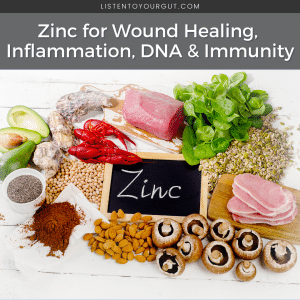
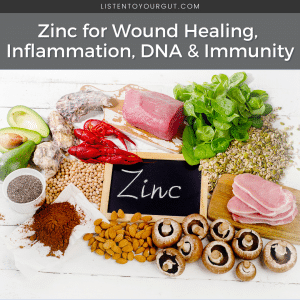
Zinc is often added to foods (e.g., fortified breakfast cereals), is available as a dietary supplement, and is found in many over-the-counter cold medications and lozenges. It occurs naturally in foods like oysters (which actually contain the most zinc per serving than any other food! See the food table here), certain types of seafood (like crab and lobster), beans, nuts, and whole grains. There are some studies on phytates (found in whole grains) that show that phytates bind to zinc and inhibit its absorption. I wrote about this in my blog post “Soaking Oats, Nuts, Quinoa and the Phytate Dilemma.” Other foods such as garlic and onions (which are often cooked with beans) can increase the bioavailability of minerals such as zinc and iron, thereby compensating for phyte inhibition.
Phew – what a powerhouse of a mineral!
If you haven’t tried it yet or found a zinc supplement you can tolerate, then I recommend you consider the ionic charged, atom-sized QuikPlus Zinc – which requires no digestion (so doesn’t stress your gut), is virtually tasteless, is liquid so mixes easily into any drink, and is absorbed into the bloodstream almost immediately.
Studies referenced in this blog post:
National Institute of Health (NIH) fact sheet on zinc
New mineral absorption enhancers found
The role of zinc in antiviral immunity
Zinc: Role in immunity, oxidative stress and chronic inflammation

Jini Patel Thompson is an internationally recognized expert in natural healing for digestive diseases. She healed herself from widespread Crohn’s disease and has been medication and surgery free for over 25 years. Jini has appeared on numerous podcasts, TV and radio shows in the US, UK, Canada and Australia, giving people hope and vision on how to heal their colitis, Crohn’s disease, diverticulitis and irritable bowel syndrome (IBS) using all-natural methods. Her books on natural healing of digestive diseases have been sold in over 80 countries worldwide. Jini is married and has three children, nine sheep, 11 horses, a cat and three dogs.
