

 While doing my weekly grocery shopping the other day, I came across a huge bag of organic Brussels sprouts – and for some reason I was totally drawn to them. I immediately craved Brussels sprouts!
So I grabbed the bag and started looking for a recipe that I could make for the LTYG community to be good for the gut, as well as some additional information on how Brussels pours can be good for the gut.
Remember: Even though I modified this recipe, Jini ONLY recommends eating Brussels sprouts Phase four of the food reintroduction table found in her book “Listen to Your Belly” (page 251). So until you get to phase four, I wouldn’t try this recipe yet. Cruciferous vegetables can cause gas and bloating if you haven’t reached stage four yet – save this recipe for the future instead. 🙂
Brussels sprouts for gut health
So for those of us who have healed enough to consume Brussels sprouts, let’s talk about how they can help your gut! I came across this lovely recipe that I modified to make it more gut-friendly – check out some of the benefits this chef mentions in the recipe:
“In a recently published study on the effects of consuming cruciferous vegetables such as Brussels sprouts on the gut microbiome, researchers found that the composition of human gut bacteria changed with an increase in Brussels sprout consumption, which could ultimately influence gut metabolism of bioactive food components.”
In other words, eating Brussels sprouts increases the number of good bacteria in your gut, which could help promote digestion and eliminate more harmful bacteria.”
This additional study I found shows how cruciferous vegetables may help reduce your risk of colon cancer:
“High intake of glucosinolate-containing cruciferous vegetables such as Brussels sprouts (Brassica oleraceae) has been linked to a reduced risk of cancer…
In summary, consumption of glucosinolate-containing Brussels sprouts over a period of one week results in increased rectal GST-alpha and pi isozyme levels. We hypothesize that these elevated detoxification enzyme levels may partially explain the epidemiological association between high glucosinolate (cruciferous) intake and a reduced risk of colorectal cancer.”
Brussels sprouts are also rich in antioxidants, vitamins and minerals. To read 9 Ways Brussels Sprouts Benefit Your Health Here.
Now for the recipe…
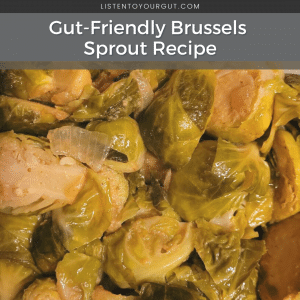
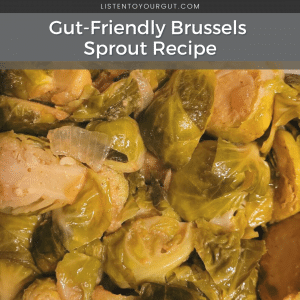
Gut-Friendly Brussels Sprouts Recipe
Ingredients:
1 pound Brussels sprouts
1 onion (*omit if you can’t tolerate it)
2 tbsp organic mustard
2 tbsp avocado oil
1 tbsp organic maple syrup (*you can also use manuka honey, stevia or monk fruit (luo han guo))
½ tbsp garlic powder (*omit if you can’t tolerate it)
½ tbsp salt and pepper
First, I halved all of the Brussels sprouts and placed them in a bowl with water (filtered) and white vinegar. I usually eyeball it, but I often use ½ – 1 cup of white vinegar in a bowl of water (depending on the size of the bowl).
I ALWAYS wash my fruits and vegetables first before eating them to remove pesticides and bacteria/pathogens.
While I let them soak, I heated up the burner and began pouring my sauce ingredients into a large pot. When the pot got hot, I chopped an onion and added it along with all the other ingredients to allow everything to simmer and the flavors to really develop.
The reason I cook these Brussels sprouts in a large pot instead of baking them is because the steam softens them and reduces the fiber and fiber, making them good for the gut! They can be reduced a bit and are much softer to eat. They may not be as crispy, but your tummy will thank you! 🙂
After the Brussels sprouts had soaked for about 15 to 20 minutes and the ingredients in the pot began to simmer, I added my Brussels sprouts. I added them slowly, in batches, making sure they were coated in the flavor. Note that you don’t have to use the full 1 pound of Brussels sprouts if you don’t want to, but I also cooked for the family. You can also adjust the amount of spices or add more if necessary.
Cook everything in the pot until the Brussels sprouts turn dark green and soft. Then you know they are ready to eat!

However, since they are so soft, I recommend eating them immediately (or within a day) as they may fall apart or become too mushy afterward.
Overall it had a really nice sweet and salty taste! I hope you enjoy and please let me know if you have tried this recipe and what you think of it. 🙂
Until next time, happy eating, happy healing – and remember to always listen to your gut!

Linsy is Jini’s assistant. From a highly sensitive/reactive case of ulcerative colitis to a fully medical and surgical treatment using all-natural methods, Linsy truly understands first-hand the interplay of mind/body/spirit on the healing journey.
