


I used to think low progesterone was something that happened to my clients but actually wouldn’t happen to me lol.
I had heard the stories, had helped women work through the symptoms, and understood the physiology. And then, sometime in my early 40s, it happened anyway. All of a sudden, I became inexplicably irritable and rage-y in a way that did not feel like me. My sleep – which had always been one of my superpowers – fell apart almost overnight. I went from sleeping like a happy baby to tossing and turning, wide awake at 2am with a racing mind and a low hum of anxiety I couldn’t shake.
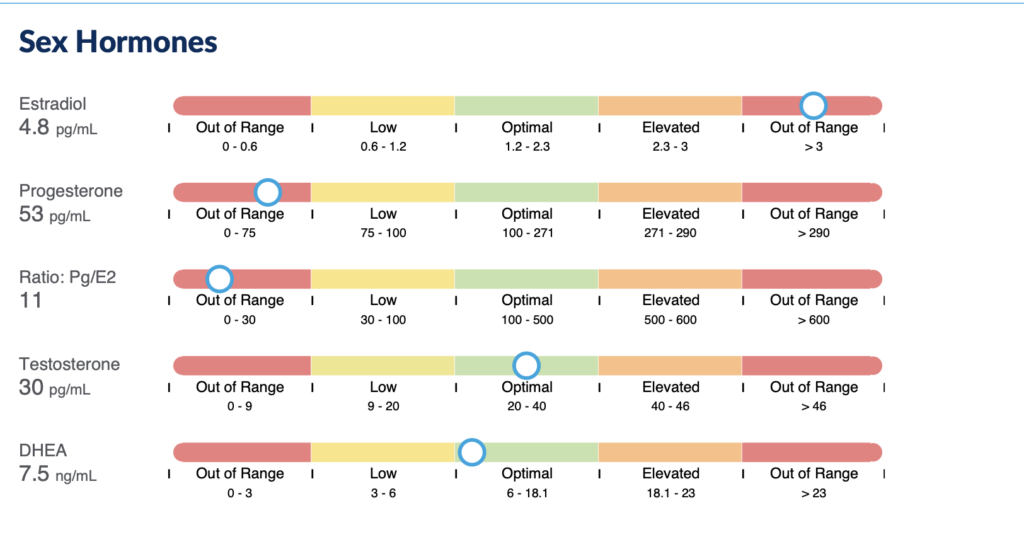
I ran some functional lab testing and found that my progesterone was on the floor. I shouldn’t have been surprised, because it’s incredibly common for women in their late 30s and 40s and often goes completely unidentified because the symptoms look like stress, burnout, or just “getting older.”
If any of this sounds familiar, this post is for youuuuuu. As an Integrative Health Practitioner and women’s fitness specialist, I want to chat with ya about what low progesterone looks like, why it happens, how to test for it properly, and what you can actually do about it – naturally and beyond. (friendly reminder that this is NOT medical advice. As always, talk to your doctor before making any changes with your routine.)
In This Post
- What Progesterone Actually Does
- Signs and Symptoms of Low Progesterone
- What Causes Progesterone to Drop
- How to Test Your Progesterone Levels (and Why Timing Matters)
- How to Support Progesterone Naturally
- When Natural Support Is Not Enough
- FAQ

What Progesterone Actually Does
Before we talk about what happens when progesterone is low, it helps to understand why this hormone matters so much in the first place.
Progesterone is often called the calming hormone, and for good reason. It works as a natural counterbalance to estrogen – while estrogen is stimulating and growth-promoting, progesterone is stabilizing and protective. It is produced primarily after ovulation, during the second half of your menstrual cycle (called the luteal phase), and it does a remarkable number of things in the body:
- Supports deep, restorative sleep by converting to a compound called allopregnanolone, which activates the brain’s calming GABA receptors
- Acts as a natural anti-anxiety agent through those same GABA pathways
- Regulates mood and reduces PMS symptoms
- Helps maintain regular menstrual cycles
- Protects against estrogen dominance
- Has anti-inflammatory and neuroprotective properties
- Supports thyroid function
- Has anti-growth and anti-tumor properties, making it genuinely protective for long-term health
When progesterone starts to decline, which happens gradually throughout our 30s and more dramatically as we approach perimenopause, all of these functions are affected. That is why the symptoms can feel so widespread and confusing.
Signs and Symptoms of Low Progesterone
This is the list I wish someone had handed me years ago! Low progesterone can show up in so many ways that women often chalk it up to stress or aging rather than recognizing it as a hormone issue.
Sleep Problems
This was my biggest signal. Progesterone helps your brain wind down and stay in deeper stages of sleep. When levels drop, sleep becomes lighter, more fragmented, and less restorative. Many women notice they wake between 2am and 4am and cannot fall back asleep. If you have gone from a solid sleeper to someone who dreads bedtime, low progesterone is worth investigating.
Anxiety and Irritability
Because progesterone supports GABA activity in the brain, low levels can feel like a low-grade anxiety that seems to come from nowhere – or a short fuse and emotional reactivity that does not feel like you. I describe my experience as feeling rage-y in a way that was genuinely out of character. If you find yourself snapping more easily, feeling on edge, or experiencing a kind of free-floating worry, this is a classic low progesterone pattern, especially if it is worse in the second half of your cycle.
Short Menstrual Cycles
This one is a key clinical sign that does not get talked about enough. Progesterone is only produced after ovulation, so if your luteal phase (the time between ovulation and your period) is shrinking, your progesterone is likely low. Cycles that are 24 to 25 days long instead of 28 to 30 are often a sign of a shortened luteal phase and inadequate progesterone. My own cycles had shortened noticeably before I got my levels tested and once I addressed my progesterone, they normalized back to 28 days.
Worsening PMS
If your premenstrual symptoms are getting worse with age – more bloating, more breast tenderness, more mood swings, more cramps – that is often a progesterone story. PMS intensifies when estrogen is not being adequately balanced by progesterone in the luteal phase.
Heavy or Irregular Periods
Progesterone stabilizes the uterine lining. Without enough of it, the lining can build up excessively (thanks to unopposed estrogen), leading to heavier bleeding, clotting, or spotting between periods.
Hot Flashes
Hot flashes are not just a menopause symptom – they can show up during perimenopause when progesterone is declining, even if estrogen is still relatively normal. If you are in your late 30s or early 40s and experiencing warmth or flushing, it is worth looking at your full hormone picture.
Low Libido
Progesterone plays a role in sexual interest and drive. Low levels can show up as a general disinterest in sex, especially in the second half of your cycle.
Weight Gain and Bloating
Without progesterone’s balancing effect, estrogen can promote fluid retention and fat storage, particularly around the midsection. If your weight has been creeping up without clear explanation, hormones may be part of the picture.
Headaches and Migraines
Progesterone has vascular and neuroprotective properties. When it dips in the luteal phase, many women notice an increase in headaches or menstrual migraines.
Fatigue
Poor sleep plus hormonal imbalance equals exhaustion. If you are tired no matter how much rest you get, and the fatigue is worse in the weeks before your period, low progesterone could be a contributing factor.
What Causes Progesterone to Drop
Understanding the root causes matters, because if you only address symptoms without addressing causes, you are going to keep running uphill.
Here are the most common drivers I see in my practice:
Chronic Stress (This Is the Big One)
Your body has to feel safe to make progesterone. That is not just a nice idea; it is physiology. When you are chronically stressed, your adrenal glands prioritize producing cortisol, your primary stress hormone. The problem is that cortisol and progesterone share the same hormonal building block (pregnenolone), and when cortisol demand is high, the body essentially steals from progesterone production to keep up. This is sometimes called the “pregnenolone steal” and it is one of the most common drivers of low progesterone I see, especially in high-achieving, always-on women.
Stress does not just mean emotional overwhelm either. Undereating, over-exercising, poor sleep, and toxic exposures all count as physiological stress. Your body cannot tell the difference between a deadline and a famine – it just knows it does not feel safe, and it downregulates reproductive hormones accordingly.
Perimenopause and Aging
Progesterone is actually the first hormone to decline as we approach perimenopause, often starting in our mid-30s, years before estrogen drops and before periods become irregular. This is why so many women in their late 30s and 40s start experiencing symptoms they cannot explain. Their estrogen may still be totally normal, but the progesterone that should be balancing it has quietly started declining.
Anovulatory Cycles
Progesterone is only made after ovulation. If you are not ovulating (which can happen due to stress, undereating, thyroid issues, or PCOS), you are not producing meaningful progesterone – even if your cycle appears regular on the outside.
Gut Imbalances
This connection is underappreciated but really important. Hormones including progesterone are produced and converted in part through the gut. If there are imbalances in your gut microbiome – dysbiosis, leaky gut, poor elimination – your body’s ability to properly produce, use, and clear hormones is compromised. A specific collection of gut bacteria called the estrobolome is responsible for metabolizing estrogen. When it is disrupted, estrogen can recirculate rather than clear, creating a relative progesterone deficiency even when progesterone itself is not technically low.
Thyroid Dysfunction
The thyroid and reproductive hormones are deeply connected. Low thyroid function can impair ovulation and reduce progesterone production, which is why thyroid testing should always be part of a hormone workup.
How to Test Your Progesterone Levels (and Why Timing Matters)
Here is something I feel strongly about: most conventional progesterone testing is done incorrectly, and this leads to a lot of women being told their levels are “normal” when they are actually struggling.
Many doctors order a blood test for progesterone at a random point in the cycle – or even on day 3 alongside estrogen and FSH. But progesterone fluctuates dramatically across the cycle. Testing it at the wrong time tells you almost nothing. Progesterone is naturally low in the first half of your cycle (the follicular phase), so a low result drawn on day 5 is completely expected and not diagnostic of a problem.
The right time to test is during the mid-luteal phase, around days 19 to 21 of a 28-day cycle. This is when progesterone should be at its peak, and it is the only time a low result is actually meaningful.
Why I Prefer Saliva Testing
Beyond timing, I also prefer saliva testing over blood testing for progesterone, and here is why. Almost all of the progesterone circulating in the bloodstream is bound to carrier proteins, which means it is not bioavailable – it cannot actually act in your cells. Saliva testing measures the free, unbound hormone that is available to do its job in the body. It gives you a much more accurate picture of what your tissues are actually experiencing.
If you want to dig into your hormone health with real data rather than guessing, testing is the place to start.
How to Support Progesterone Naturally
Whether you are in the early stages of noticing symptoms or actively working to rebuild your levels, there is a lot you can do. I always start with foundations before reaching for supplements, because foundations are what make everything else work.
Prioritize Stress Management (Non-Negotiable)
I know “manage your stress” sounds like advice you have heard a thousand times. But when it comes to progesterone specifically, it is not optional. If your nervous system is in chronic fight-or-flight mode, your body is going to keep prioritizing cortisol over progesterone, period. You have to give your body the signal that it is safe.
What this looks like in practice:
- A consistent sleep schedule (your body makes hormones on a schedule)
- Daily parasympathetic activity – walks, breathwork, gentle yoga, meditation, time in nature
- Not over-exercising (high-intensity training every day is a stressor, especially for women with hormone imbalances)
- Eating enough – chronic undereating is a major hormonal stressor that many health-conscious women overlook

Eat to Support Progesterone: Fruits and Roots
A simple framework I love for progesterone support is “fruits and roots.” This refers to the kinds of whole, nourishing foods that provide the raw materials your body needs to make and regulate hormones.
Key nutrients for progesterone production:
- Vitamin C: The ovaries contain some of the highest concentrations of vitamin C in the body, and it plays a direct role in progesterone synthesis. Think citrus fruits, kiwi, red bell peppers, strawberries, and broccoli.
- Vitamin B6: Supports hormone balance and helps the liver clear excess estrogen. Found in chickpeas, bananas, potatoes, poultry, and leafy greens.
- Zinc: Stimulates the pituitary to release FSH, which supports ovulation and therefore progesterone production. Pumpkin seeds, cashews, and grass-fed beef are great sources.
- Magnesium: Helps lower excess estrogen and supports progesterone indirectly. Found in leafy greens, dark chocolate, pumpkin seeds, and avocado. Most women are deficient and benefit from supplementing with magnesium glycinate. This is my favorite magnesium.
- Healthy fats: Hormones are built from cholesterol, so you need adequate healthy fats to produce them. Avocado, olive oil, fatty fish, nuts, and seeds are your friends.
Root vegetables – sweet potato, yam, squash, beets – are also wonderful because they provide stable, complex carbohydrates that support blood sugar balance, which in turn supports healthy hormone rhythms.
Support Your Gut
Because hormones are produced and converted in the gut, gut health is hormone health. Focus on fiber (especially from vegetables and legumes), fermented foods like sauerkraut and kefir if tolerated, and reducing things that disrupt the gut microbiome like alcohol, processed foods, and unnecessary antibiotic use. If you suspect deeper gut issues, functional testing can be incredibly eye-opening.
Consider Seed Cycling
Seed cycling is a practice of eating specific seeds during each phase of your menstrual cycle to support hormone production and balance. During the second half of your cycle (the luteal phase, days 15 to 28), sesame seeds and sunflower seeds are traditionally used to support progesterone. It is a gentle, food-based approach that many women find helpful, especially when combined with other lifestyle changes.
Herbal Support
Several herbs have a long history of supporting progesterone and overall hormone balance. Vitex (also called chasteberry) is one of the most well-researched. It works by supporting the pituitary’s release of LH, which stimulates ovulation and therefore progesterone production. It is generally best suited for premenopausal women with luteal phase issues rather than women who are already in perimenopause or beyond.
I used herbal support as my first step when I noticed my progesterone declining, and it worked well for a period of time. Herbs can be a great starting point, especially for women who are earlier in the hormonal transition.

When Natural Support Is Not Enough
I want to be real with you here, because I think there is sometimes unnecessary stigma around hormone support, and I have lived this personally.
I started with herbal support and it helped for a while. But as my levels continued to decline, I eventually transitioned to topical progesterone, and it has genuinely changed my quality of life. I use Raena, which I love, and I only use it during the second half of my cycle – the luteal phase. The difference has been remarkable. I sleep so deeply during this time. I feel calm and even in a way that I had started to think was just gone. My cycles normalized from 24 to 25 days back to a full 28 days.
Bioidentical topical progesterone is not the scary thing it is sometimes made out to be – especially when used in physiologic doses to restore what your body is no longer making on its own. I wish more women knew that this option exists and that it does not have to feel like a last resort. Getting your levels tested first is key, so you know what you are working with and can track your response over time.
If you are not sure where to start with all of this, working with a practitioner who understands functional hormone testing and bioidentical hormone support can save you years of guessing. This is exactly the kind of work I do with my 1:1 clients – connecting your symptoms to your lab data and building a personalized plan from there. If you’re interested, send me an email gina@fitnessista.com subject TESTING.
FAQ
What are the most common signs of low progesterone?
The most common signs include poor sleep (especially waking in the night), anxiety or irritability, worsening PMS, short menstrual cycles, heavy periods, and low libido. Many women notice these symptoms intensifying in the week or two before their period, which corresponds to the luteal phase when progesterone should be at its highest.
Can low progesterone cause weight gain?
Yes, indirectly. Without enough progesterone to balance estrogen, the body tends to retain more fluid and store more fat, particularly around the midsection. Progesterone also supports thyroid function, and a sluggish thyroid can contribute to weight changes.
How do I know if my progesterone is low?
Testing is the only way to know for certain. The most important thing is to test at the right time – around days 19 to 21 of your cycle – when progesterone should be at its peak. Saliva testing or the DUTCH test can give you a more complete picture than a standard blood draw.
What is the fastest way to increase progesterone naturally?
There is no true shortcut, but the highest-impact steps are reducing chronic stress, eating enough (especially vitamin C, zinc, B6, magnesium, and healthy fats), supporting gut health, and prioritizing sleep. These create the conditions your body needs to produce progesterone. Herbs like Vitex can also help, particularly for premenopausal women.
Is low progesterone common in perimenopause?
Extremely common and it is often the first hormone to decline, sometimes years before estrogen drops or periods become irregular. Many women in their late 30s and early 40s have low progesterone while their estrogen is still completely normal. This is why symptoms can show up so much earlier than women expect.
Can stress cause low progesterone?
Yes, significantly. Chronic stress elevates cortisol, which competes with progesterone for the same hormonal building blocks. This is sometimes called the pregnenolone steal. Chronic undereating, over-exercising, and poor sleep all have a similar effect because the body treats them as physiological stress.
What is the difference between saliva and blood testing for progesterone?
Blood tests measure total progesterone, most of which is bound to carrier proteins and not available to act in the body. Saliva testing measures free, bioavailable progesterone – the fraction that your tissues can actually use. Many functional practitioners prefer saliva or dried urine testing (DUTCH) for this reason, as they give a more accurate picture of what your body is actually experiencing.
Does gut health affect progesterone?
Yes, and this connection is underappreciated. Hormones are produced and metabolized in part through the gut. If there are imbalances in the gut microbiome, your body’s ability to produce, convert, and clear hormones – including progesterone – is impaired. Supporting gut health is a foundational piece of hormone balance.
Disclaimer: I am an Integrative Health Practitioner and women’s fitness specialist, not a physician. Nothing in this post constitutes medical advice. Please work with a qualified healthcare provider before making changes to your hormone support protocol.
Success! Check your email for a free 30-day meal and fitness cheat sheet
